

What Is Hearts?
Hearts is a trick-taking card game for four players in which you try not to score: every heart you win in a trick costs 1 point and the Queen of Spades costs 13. Each player gets 13 cards from a standard 52-card deck, and when someone reaches 100 points, the lowest score wins.
You can play Hearts online free at the top of this page, the classic four-seat game with the left, right, across, and hold passing cycle. Play solo against three computer players, or against people at a live table. There is nothing to download and nothing to sign up for.
Unlike Spades, Hearts has no bidding and no trump suit. The highest card of the suit led wins each trick, and a good hand is one that loses the right tricks.
| Players | 4, each playing alone |
|---|---|
| Deck | 52 cards, no jokers; Ace high, 2 low |
| Cards each | 13 |
| Trumps | None |
| Pass | 3 cards: left, right, across, then a hand with no pass |
| First lead | The 2 of clubs |
| Penalty cards | Each heart 1 point, the Queen of Spades 13: 26 a hand |
| Game | Ends when a player reaches 100; the lowest score wins |
Play Hearts Online with Friends
Hearts has live tables here, so you can play against real people as well as the computer. It is one of three games on the site with online play, with Spades and Russian Bank. Open Find a Match below the game and choose how to play:
- Quick Match seats you with three other players. If nobody is free in time, you can start with computer players instead.
- Ranked pairs you with players rated within 200 points of you. Everyone starts at 1200, and each finished ranked game moves your Hearts rating up or down.
- Create Hearts Room opens a private table and gives you a link to send to friends. With only two or three of you, the host can start with computer players in the empty seats.
If a player drops out or runs out of time, the computer plays their seat, so the hand goes on. Every hand, solo or online, is dealt by our provably fair shuffle, and when an online game ends the table reveals its seed so all of its hands can be dealt again and checked.
How to Play Hearts
The rules of Hearts fit in eight steps, and the game repeats them hand after hand until someone reaches 100 points.
- Deal 13 cards each. Shuffle a standard 52-card deck and deal all of it, one card at a time, so each of the four players holds 13.
- Pass three cards. Each player passes three cards face down: to the left on the first hand, to the right on the second, and across on the third. Nobody passes on the fourth hand, and then the cycle repeats.
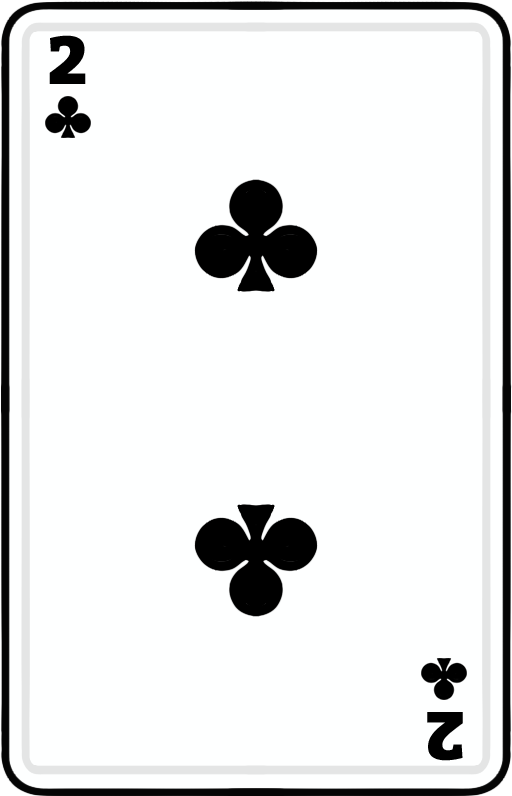
- Lead the 2 of clubs. Whoever holds the 2 of clubs after the pass leads it to the first trick.
- Follow suit if you can. Play goes clockwise, and each player must play a card of the suit led. With none of that suit, play any card, except that hearts and the Queen of Spades may not be played to the first trick.
- Win with the highest card of the suit led. There are no trumps. The highest card of the suit led takes the trick, and its winner leads the next one.
- Wait for hearts to be broken. Nobody may lead a heart until a heart or the Queen of Spades has been played to an earlier trick, unless they hold nothing but hearts.
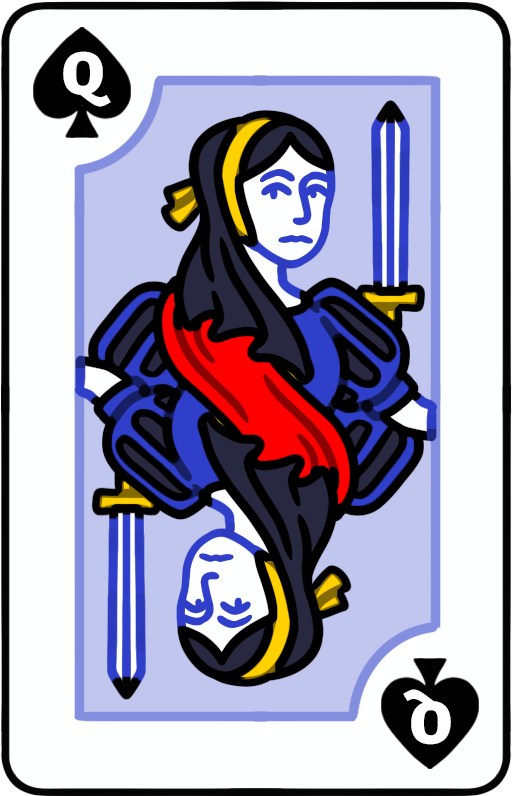
- Count the points you took. After all 13 tricks, each heart you won costs 1 point and the Queen of Spades costs 13. Take all 26 and you shoot the moon instead: you score nothing and everyone else scores 26.
- Play to 100. Deal again. When a player reaches 100 points at the end of a hand, the player with the lowest score wins.
Our game will not let you play an illegal card, so nobody can renege, and it keeps the score for you. The full Hearts rules add the fine print, the house rules other tables use, and a glossary.
Passing Cards in Hearts
Before each hand except every fourth, you pass three cards and receive three. Choose yours before you see what is coming: the cards passed to you arrive only after everyone has passed.
| Hand | Pass | You pass to | You receive from |
|---|---|---|---|
| 1 | Left | West | East |
| 2 | Right | East | West |
| 3 | Across | North | North |
| 4 | No pass (hold) | Nobody | Nobody |
Hand 5 passes left again. The best cards to pass are the ones most likely to win a trick you do not want: the Queen of Spades when you lack spades to hide her, the Ace and King of spades when you are short in spades, high hearts, and the last cards of a short suit.
Playing the Tricks: Following Suit and Breaking Hearts
You must follow the suit led whenever you can, and only a card of that suit can win the trick. A player with none of it may throw any card, which is how points land on other people's tricks.
Points are banned from the first trick: a player out of clubs must throw something other than a heart or the Queen of Spades, unless every card in their hand is a point card. From the second trick on, a player who cannot follow suit may play anything.
The Queen of Spades herself may be led at any time after the first trick, even before hearts are broken.
Hearts Scoring
Each heart you take in a trick costs 1 point, the Queen of Spades costs 13, and no other card scores, so there are exactly 26 points in every hand. Scores add up from hand to hand, and the lowest total wins.
 Each heart (13 in the deck)1 each
- Queen of Spades13
 Every other card0
How to Keep Score in Hearts
Write down the points each player took, then the running total. Here are four sample hands, scored the way our game scores them. Each cell shows the points taken in the hand, then the running total in brackets:
| Hand | You | West | North | East |
|---|---|---|---|---|
| 1 (left) | +0 (0) | +13 (13) | +5 (5) | +8 (8) |
| 2 (right) | +7 (7) | +2 (15) | +17 (22) | +0 (8) |
| 3 (across) | moon, +0 (7) | +26 (41) | +26 (48) | +26 (34) |
| 4 (hold) | +4 (11) | +3 (44) | +1 (49) | +18 (52) |
Every hand's points add up to 26, or to 78 on a moon hand, which makes a quick check on the count. After four hands you lead on 11, and the moon on hand 3 is why: it put 26 on each of the other three.
The game ends after the hand in which anyone reaches 100, and exactly 100 counts. If two players tie for the lowest score at that point, our game deals another hand until one of them is alone in front.
Shooting the Moon
Shooting the moon means taking all 13 hearts and the Queen of Spades in one hand. Instead of scoring 26, you score nothing and each other player scores 26. Miss by a single heart and the moon fails: you keep the 25 points you took.
That is why many tables give the shooter a choice: subtract 26 from their own score instead, sometimes only when adding 26 would end the game against them. Our game has no such option, so late in a game, count the scores before you go for it.
A moon needs long, high hearts, winners in the other suits, and few low cards that could lose the lead at the wrong moment. Keep it hidden until the hearts are yours: one heart won by anyone else ends it.
How Many People Can Play Hearts?
Hearts is best with four, and three to six can play by taking low cards out so the deal comes out even. Most groups use these deals:
| Players | Take out | Cards each | First lead |
|---|---|---|---|
| 3 | The 2 of diamonds | 17 (3 x 17 = 51) | 2 of clubs |
| 4 | Nothing | 13 (4 x 13 = 52) | 2 of clubs |
| 5 | The 2 of diamonds and 2 of clubs | 10 (5 x 10 = 50) | 3 of clubs |
| 6 | Four low cards | 8 (6 x 8 = 48) | Lowest club dealt |
Three players usually pass left, then right, then hold. Groups of six disagree on which four cards come out. Two people have no standard game; the rules for 2, 3, 5, and 6 players cover each in full.
Our tables always seat four. Solo, you play three computer players. Online, two or three friends can open a private table and let the computer fill the empty seats.
Hearts Strategy
The Queen of Spades is half of the 26 points in every hand, so most Hearts strategy is about where she lands, starting with the pass. These tips hold at any table:
- Keep the Queen of Spades only with three lower spades. With fewer, pass her, or pass the Ace and King of spades, which can win the trick she lands on.
- Never pass your low spades. They let you play under the Queen, and a hand stripped of small spades is stuck with whatever big spades it is passed.
- Pass a short suit away. Giving up your two diamonds leaves you void, so every diamond lead lets you throw a heart or the Queen on someone else.
- Use the first trick to shed a high club. No points can be played to it, so winning it with the Ace or King of clubs costs nothing, though it puts you on lead.
- Smoke out the Queen with low spades. If you hold several low spades and no high ones, lead them. Each spade lead strips a card from her cover, until her holder has nothing lower left to play.
- Save a low card for the end. A player stuck on lead in the last few tricks can be forced to take them all.
- Aim your points at the leader. The lowest score wins, so a Queen dropped on the player in front does more for you than one dropped on a player already behind.
- Stop a moon early. If one player is taking every heart, win a single heart yourself. One point beats the 26 you score if the moon comes in.
How Our Computer Players Play
The three computer players follow fixed habits, and knowing them helps.
- They pass the Queen of Spades whenever they hold her, then their highest hearts, then their highest other cards. If the player passing to you had the Queen, you have her now.
- They follow suit with their lowest card, so they take a trick only when even that card is the highest played.
- With no card of the suit led, they throw the Queen first (never on the first trick), then their highest heart. Once one of them shows out of a suit, do not win the next trick in that suit while the Queen has not been played.
- They never try to shoot the moon, and never play to stop yours.
For worked hands and more on passing and card counting, read our guide on how to win at Hearts.
Where Hearts Came From
Hearts is American. The Standard Hoyle of 1887 said it had been played in the United States for about five years and was probably German in origin. It belongs to the reverse games, where you try to lose tricks, and its likely ancestor, Reversis, was recorded in France in 1601.
In the first Hearts only the hearts counted. The Queen of Spades arrived in 1909, when R. F. Foster described Discard Hearts, also called Black Lady: the Queen worth 13 and three cards passed to the left. That is the game Americans now call Hearts, and Australians call Rickety Kate. Britain's Black Maria adds the Ace and King of spades as penalty cards. Microsoft put Hearts on Windows in 1992 and kept it there through Windows 7. The history of Hearts has the longer story.
Frequently Asked Questions
What is the object of the game Hearts?
To finish with the lowest score. Each heart is worth 1 penalty point and the Queen of Spades 13, and they count against whoever wins the tricks they fall in, so you try to lose those tricks. When a player reaches 100 points the game ends, and the player with the fewest points wins.
What are the best cards to pass in Hearts?
Pass the cards most likely to win tricks you do not want: the Queen of Spades unless you hold three lower spades, the Ace and King of spades when you have few spades, and high hearts. Passing every card of a short suit gives you a void to throw points into.
Do you pass 2 or 3 cards in Hearts?
Three. In the four-player game each player passes three cards, choosing them before seeing the three they receive. The pass goes left, then right, then across, and the fourth hand has no pass. Tournament rules skip the no-pass hand and pass every time; our game keeps it.
Can you throw a heart on the first hand in Hearts?
Not in our game. No heart and no Queen of Spades may be played to the first trick, even by a player with no clubs, unless their hand holds nothing but hearts and the Queen. Many tables play the same way, but some house rules allow a heart on the first trick.
Does the Queen of Spades break hearts?
In our game, yes. Hearts are broken the first time a heart or the Queen of Spades is played to a trick, however she is played, so once the Queen appears anyone may lead a heart. Tables disagree on this rule, and some count only a heart, so settle it before you deal.
What happens when you shoot the moon in Hearts?
You score nothing for the hand and each of the other three players scores 26. You need every point card: all 13 hearts and the Queen of Spades. Many tables let the shooter subtract 26 from their own score instead, but our game always adds 26 to everyone else.
Can you play Hearts with 3 people?
Yes. Take the 2 of diamonds out of the pack and deal 17 cards each, which uses all 51 that are left. The 2 of clubs still leads, and the pass usually goes left, then right, then a hand with no pass. Our tables seat four, so online the computer takes the fourth seat.
How to play Hearts for two people?
Hearts has no standard two-player form. One published method strips the pack to 28 cards (no 3s, 5s, 7s, 9s, Jacks, or Kings), sets two of them aside unseen, and deals 13 each. Online, two friends can open a private table here and let the computer play the other two seats.
Where can I play Hearts online for free?
Right here. The game at the top of this page plays free in your browser with no download or sign-up: solo against three computer players, Quick Match or Ranked against people, or a private table you share with friends by link. Every hand is dealt by our provably fair shuffle.
What happens if there is a tie in Hearts?
If two or more players tie for the lowest score when someone reaches 100, our game deals another hand, and keeps dealing until one player is alone in front. A tie anywhere else on the scoreboard changes nothing, because only the lowest score wins.
Play Hearts Online Free
Deal a hand above and the game keeps score for you. The daily Hearts challenge deals every player the same hands that day, or browse every card game we host. If you play Spades too, our guide to Hearts vs Spades sets the two trick-taking games side by side.