

What Is Klondike Solitaire?
Klondike Solitaire is the one-player card game most people simply call Solitaire, and in Britain, Patience. You deal 28 cards into seven columns, keep the other 24 as a stock, and win by building all four suits from Ace to King on the foundations. The game above deals it free in your browser, with no download.
Only 7 of the 28 tableau cards start face up. The other 21 are hidden, and the game is a hunt for them: every card you turn over opens new moves, and a deal is lost when one of them can never be reached. You can turn the stock one card at a time or three at a time, the two ways of playing known as turn 1 and turn 3.
- Cards: 52, one standard deck, no jokers
- Tableau: 7 columns of 1 to 7 cards, 28 in all
- Stock: 24 cards, turned one or three at a time
- Foundations: 4, one per suit, Ace up to King
- Building: down one rank at a time, red on black or black on red
- Empty column: a King only
How to Set Up Klondike Solitaire
Shuffle one 52-card deck and deal seven columns from left to right: one card in the first, two in the second, and so on up to seven in the last. Turn the last card of each column face up. That uses 28 cards. The other 24 go face down in a stock at the top left, with room beside it for a waste pile and, on the right, four foundations that start empty.
The oldest known printed rules, in the 1907 edition of Hoyle's Games, deal the same shape in rows: one card face up and six face down along the top, then one face up on the second pile and five face down beside it, until every pile has its face-up card. Dealt in rows or in columns, the layout comes out the same.
How to Play Klondike Solitaire
Move cards between columns to uncover the hidden ones, and send each suit up to its foundation in order, Ace first.
- Build down in alternating colors. Move a face-up card onto a card one rank higher of the other color: a black 9 on a red 10, a red 6 on a black 7. A face-up card takes every card on top of it along.
- Turn over each card you uncover. When a move leaves a face-down card at the end of a column, it turns face up and joins the game.
- Fill an empty column with a King. Only a King, or a pile with a King at its head, can move into an empty column.
- Turn the stock when you run out of moves. Click the stock to turn one card, or three, onto the waste. Only the top waste card can be played. When the stock runs out, click it again to turn the waste over and start another pass.
- Build the foundations from Ace to King. Each Ace starts a foundation. Add the 2 of the same suit, then the 3, and so on up to the King, from the tableau or the top of the waste.
- Win with all 52 cards on the foundations. The game is won when each of the four foundations runs from Ace to King in one suit.
The full rules, the points on which other programs differ, and a glossary of terms are on the Klondike Solitaire rules page.
Turn 1 or Turn 3: Drawing One Card or Three
Turn 1, also called draw one, turns the stock one card at a time, so all 24 stock cards show on every pass. Turn 3, also called draw three, three-card solitaire, or Klondike by Threes, turns three at a time and lets you play only the top one, so a first pass reaches 8 of the 24. The deal and every other rule stay the same.
| Turn 1 | Turn 3 | |
|---|---|---|
| Cards turned per click | 1 | 3 (fewer at the end of the stock) |
| Stock cards you can reach on a first pass | All 24 | 8, every third card |
| Passes through the stock in our game | Unlimited | Unlimited |
| Deals winnable with every card known | 90.2% | 81.5% |
| Play it | Klondike Turn One | Klondike Turn 3 |
The Draw 1 / Draw 3 button above the game deals again in the other mode (it asks first if a game is under way), and this page remembers your choice. The two mode pages always open in their own mode and keep a separate game in progress, so you can leave a turn 3 deal half played and still start a turn 1 game. Some rule books limit the passes: the 1907 Hoyle offers a version that turns one card at a time and goes through the stock only once.
How Scoring Works
Standard scoring pays for progress. A card reaching a foundation earns 10 points, turning a face-down card up earns 5, and moving a waste card to the tableau earns 5, so a waste card that goes to the tableau first and to its foundation later is worth 15. Turning the waste over costs 20 points from the second time on, and the score never drops below 0.
| Standard scoring | Points |
|---|---|
| A card reaches a foundation (from the tableau or the waste) | +10 |
| A face-down card is turned up | +5 |
| A waste card moves to the tableau | +5 |
| Turning the waste over, from the second time on | -20 |
Vegas scoring treats each deal as a bet. The game charges $52 when it deals and pays $5 for every card you put on a foundation, so 11 cards is the first profitable total (up $3) and a won game nets $208. Your bank carries over from game to game in this browser. The prices are more than a century old: the 1907 Hoyle describes a banker who sells the pack for $52 and pays $5 a card, in the betting game that then went by the name Klondike. Casino-style rules turn one card at a time and allow a single pass; our Vegas mode keeps unlimited passes in both modes.
Windows Solitaire uses the same 5 and 10 points in its standard scoring and, in a timed game lasting more than 30 seconds, adds a bonus of 700,000 divided by your time in seconds. Our game keeps no score for time; the clock is there for your own records.
Klondike Solitaire Strategy: How to Win More Deals
Every tip below serves one goal: reaching the 21 face-down cards. Most lost deals are lost because one of them sits under a card that can never move, such as a black 5 lying on top of the red 6 it needs, with the other red 6 already taken.
Start with the longest columns
Column 7 hides six cards and column 2 hides one. When two moves are otherwise equal, take the one that turns a card over in the bigger column, because a trapped card is most likely to sit where the most cards are buried.
Take the free moves first: a worked opening
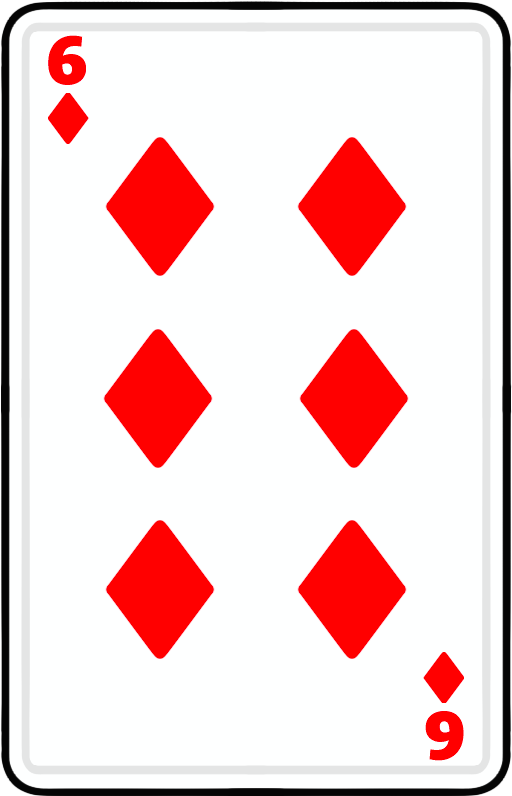
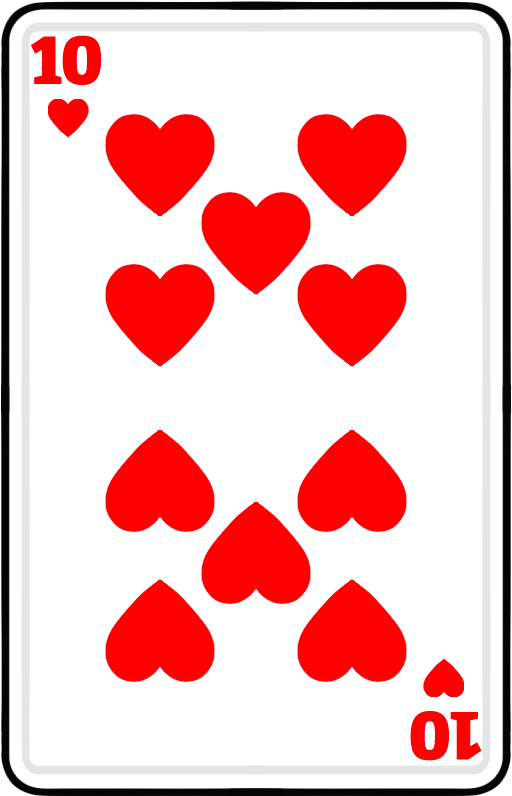
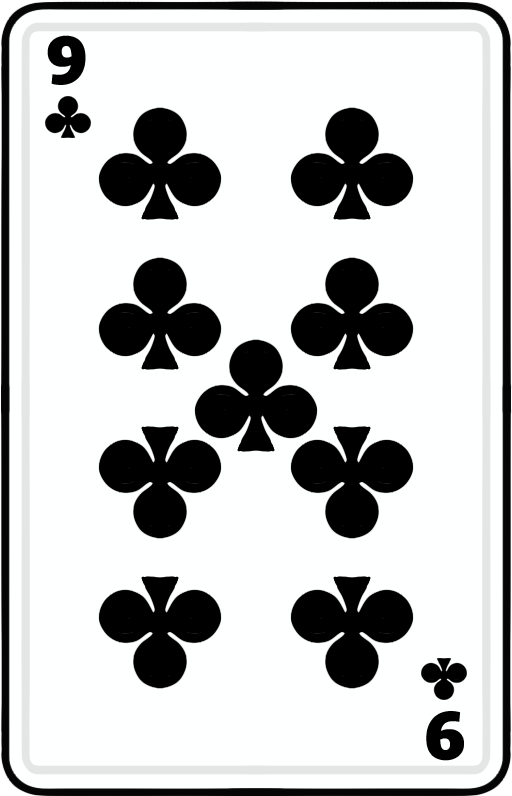
In the deal pictured above, five moves come before the stock is touched. The Ace of spades, the 2 of spades, and the Ace of hearts go up. The 9 of clubs goes onto the 10 of hearts, and the 5 of clubs onto the 6 of diamonds. Each move turns a card over: the 5 of clubs, the 3 of diamonds, the Queen of hearts, the 9 of diamonds, and the Jack of hearts. The score reads 55 and 16 cards are still hidden.
One more legal move remains, the 6 of diamonds and 5 of clubs onto the 7 of clubs, but it turns nothing over. That is the moment to turn the stock.
Send Aces and 2s up at once, other cards only when they are safe
An Ace or a 2 is never needed on the tableau, so play it up as soon as it appears. Any other card is safe to send up once both foundations of the other color have reached the rank just below it. Until then, a card of that lower rank may still need it as a place to land, and our game never lets a card come back down.
Empty a column only when a King can use it
An empty column takes nothing but a King or a King-led pile. It pays off when a King is sitting on a face-down card: move the King into the space and the card beneath it turns over. With no King ready, the space just waits.
Play stock cards only when they do a job
A card moved from the waste to the tableau takes a landing spot a tableau card may need. Put the 8 of hearts from the waste on the 9 of spades, and the 8 of diamonds has only the 9 of clubs left to land on when it turns up in a column. Play a stock card when it helps turn a hidden card over, or when you need it out of the way.
In turn 3, steer the cycle
Turning three cards at a time, you can reach only every third card, and every card you take out of the waste shifts the groups of three behind it. In the deal above, the first pass reaches the 4 of hearts, Ace of clubs, Queen of diamonds, King of hearts, 6 of spades, 2 of hearts, 10 of clubs, and King of clubs. Play the Ace of clubs when it shows and the next pass reaches six new cards, the Ace of diamonds among them.
The Klondike Turn 3 page shows that deal turn by turn and how to count your way to a buried card.
Know when a deal is stuck
Our game never declares a loss. If you have gone through the whole stock without playing a card from it, and no column move turns a card over or opens a new spot for a waste card, the deal is stuck: undo back to an earlier choice or deal again. Some deals cannot be won at all, as the next section shows.
How Often Can You Win Klondike?
With every face-down card known in advance, about nine turn 1 deals in ten and four turn 3 deals in five can be won under our rules. Nobody plays with that knowledge, and the true odds for normal play are still unknown; the mathematician Persi Diaconis called that gap an embarrassment.
The best figures come from Charlie Blake and Ian Gent, whose solver tested a million random deals for each setting. Under the exact rules our game uses (one or three cards per turn, unlimited passes, nothing taken back off a foundation), they found 90.2% of turn 1 deals and 81.5% of turn 3 deals winnable. Allowing cards back off the foundations adds only 0.3 and 0.4 percentage points.
We checked our own engine the same way. Our solver played 500 randomly shuffled deals through the same game code you play here, each one in both modes, and replayed every win move by move.
| 500 deals | Turn 1 | Turn 3 |
|---|---|---|
| Winning line found | 433 | 352 |
| Proved unwinnable | 6 | 49 |
| Not settled in the time allowed | 61 | 99 |
| Winnable, at the least | 86.6% | 70.4% |
The study's 90.2% and 81.5% both fall between what our solver proved winnable and what it could not rule out. The solver sees the hidden cards, so these are ceilings for a player, not targets.
Human records are rarer. In one documented test, a skilled player who played 442 turn 3 games under the same rules as ours, face-down cards hidden, won 189 of them: 43%. For a deal that is sure to be winnable, pick a level from the New Game menu: each graded deal has already been won by a computer player.
Playing Klondike Here
- Undo: three per game on the free plan, unlimited with SuitedGames+.
- Hint: lights up one legal move, choosing a foundation play first, then a move onto a column, then the stock.
- Sending cards up: nothing moves by itself. Double-click a card to send it to its foundation, or press Auto Complete, which appears once the stock and waste are empty and every card is face up.
- Difficulty: the New Game menu offers Random or six levels from Super Easy to Insane. Every graded deal has already been won by our solver or our computer test player, and graded deals play in turn 1.
- Daily deal: Daily Klondike gives everyone the same deal each day (reset at midnight UTC), played in turn 1, with a leaderboard.
- Fair shuffles: every New Game deal comes from a provably fair shuffle, and after a win you can send a friend a link to the same deal, in the same mode.
- Keyboard: Space turns the stock, Ctrl+Z undoes, N deals a new game, and Esc clears a selection.
Where Klondike Came From
The oldest known printed rules for today's Klondike appear in the 1907 edition of Hoyle's Games, under the name Seven-Card Klondike. The same book gives plain "Klondike" to a different game: a banker sells the player a pack for $52 and pays $5 for every card built up, so 11 cards win money and 10 lose it. That betting game, with its 13-card reserve and a starter card that sets the foundations, is the one now called Canfield in America and Demon in Britain.
Seven-Card Klondike already had the modern rules: Aces start the foundations, columns build down in alternating colors, only a King fills a space, and the stock runs off in threes. Face-up cards on a pile had to move all together, a rule some rule books still print. Where the name came from is unknown. The Klondike gold rush of the late 1800s is the usual guess, but no record connects the game to it.
A place in Windows did much to make Klondike the best-known solitaire game. Microsoft shipped it as Solitaire with Windows 3.0 in May 1990, partly to teach people to drag with a mouse; Wes Cherry wrote the program as an intern. Windows 8 replaced it in October 2012 with the Microsoft Solitaire Collection. Microsoft Solitaire entered the World Video Game Hall of Fame in 2019, and on its 30th birthday in 2020 Microsoft counted 35 million monthly players.
Klondike and Other Solitaire Games
FreeCell, Yukon, and Canfield build down in alternating colors just as Klondike does, and Spider builds down regardless of color. What changes most is how much you can see and where the spare cards sit.
| Game | Deal | Biggest difference from Klondike |
|---|---|---|
| Spider | 104 cards (two decks) in 10 columns, 50 in the stock | Runs of one suit, King down to Ace, clear themselves off the table |
| FreeCell | All 52 cards face up in 8 columns, no stock | Four free cells hold one card each; any card fills an empty column |
| Yukon | All 52 cards in seven columns, 21 face down and 31 face up, no stock | Any face-up card moves with everything on top of it, in order or not |
| Canfield | A 13-card reserve, 4 columns, and one card that sets the foundation rank | The game that was called Klondike in 1907, played three at a time |
Spider is the one most often compared with Klondike; our Klondike vs Spider comparison sets the two side by side. Every game is listed on the solitaire games page.
Klondike Solitaire FAQ
What is the difference between Solitaire and Klondike Solitaire?
For most players there is none. Solitaire is the family name for card games played alone, and Klondike is the one people usually mean by it: the game Windows shipped as Solitaire from 1990. Spider, FreeCell, and Pyramid are solitaire games too, each with its own deal and rules.
Do you flip 1 or 3 cards in Solitaire?
Either. Klondike can be played turning one card from the stock at a time or three at a time, and players call the two ways turn 1 and turn 3. Turning one shows every stock card on every pass, while turning three shows only every third card, so turn 3 is the harder game.
Is every game of Klondike Solitaire solvable?
No. Even a player who could see every face-down card would lose about 9.8% of turn 1 deals and 18.5% of turn 3 deals under our rules, according to a solver study of a million deals each. Our own solver proved 49 of 500 turn 3 deals unwinnable. Players who cannot see the hidden cards lose more often.
Is there a strategy to Klondike Solitaire?
Yes. Turn over the face-down cards, starting with the longest columns, because a deal is lost when one of them can never be reached. Send Aces and 2s up at once, keep other cards on the tableau until nothing still needs them, empty a column only for a King, and play stock cards only when they help.
What is the classic Solitaire setup?
Seven columns dealt from left to right: one card in the first, two in the second, and so on up to seven in the last, with only the last card of each column face up. That is 28 cards. The other 24 wait face down as the stock, and four empty foundations wait for the Aces.
How do I get classic solitaire back?
Windows 8 dropped the Solitaire that came with Windows from 1990 and, in October 2012, replaced it with the Microsoft Solitaire Collection, a free app with ads. You can also play classic Klondike here in any browser with no download, turning one card or three, with standard or Vegas scoring.
Why is it called Klondike?
Nobody knows. The usual story ties the name to the Klondike gold rush of the late 1800s, but no record links the card game to it. The oldest known rules, printed in 1907, use the name for two games: this one, then called Seven-Card Klondike, and a betting game now known as Canfield.
How is Klondike Solitaire scored?
In our standard scoring, a card reaching a foundation earns 10 points, turning a face-down card up earns 5, and moving a waste card to the tableau earns 5. Turning the waste over costs 20 points from the second time on. Vegas scoring instead charges $52 a deal and pays $5 per foundation card.
Can you move a card back from the foundation in Klondike?
Not in our game: once a card reaches a foundation, it stays there. Some programs allow the move, but a solver study found that only about half a percent of winnable deals need it. So send a card up only when no card left on the tableau still needs it as a place to land.
What can go in an empty column in Klondike?
Only a King, or a pile with a King at its head. A Queen or any lower card has to wait for a King of the other color to land on. Some related games let any card fill a space, and a solver study found that one change lifts turn 3 winnability from about 82% to 95%.
Play Klondike Free Online
The game at the top of this page is ready whenever you are. For a deal everyone else is playing too, try today's Daily Klondike and see how you rank on the day's leaderboard.