

What Is Yukon Solitaire?
Yukon Solitaire deals all 52 cards to the table at once and gives you no stock pile to draw from. Everything you will ever get is in front of you from the first move, and 21 of those cards start face down.
The rule that makes Yukon its own game: you can pick up any face-up card, however deeply it is buried, and move it along with every card sitting on top of it. Those passenger cards do not need to be in sequence, in suit, or in any order at all. Only two cards are ever checked, the one you picked up and the one it lands on.
That single freedom turns a Klondike habit into a Yukon mistake. In Klondike Solitaire, a card under a heap of unrelated cards is unavailable. In Yukon it is fully playable. You just take the heap with it.
How to Set Up a Yukon Deal
Deal one standard 52-card deck into seven columns holding 1, 6, 7, 8, 9, 10 and 11 cards from left to right. Column 1 gets a single face-up card. Each column after it gets one more face-down card than the column before, then five face-up cards on top.
| Column | Face down | Face up | Total |
|---|---|---|---|
| 1 | 0 | 1 | 1 |
| 2 | 1 | 5 | 6 |
| 3 | 2 | 5 | 7 |
| 4 | 3 | 5 | 8 |
| 5 | 4 | 5 | 9 |
| 6 | 5 | 5 | 10 |
| 7 | 6 | 5 | 11 |
That is 21 face-down cards and 31 face-up ones. No cards are held back. There is no stock, no waste pile and no redeal, because there is nothing left to deal.
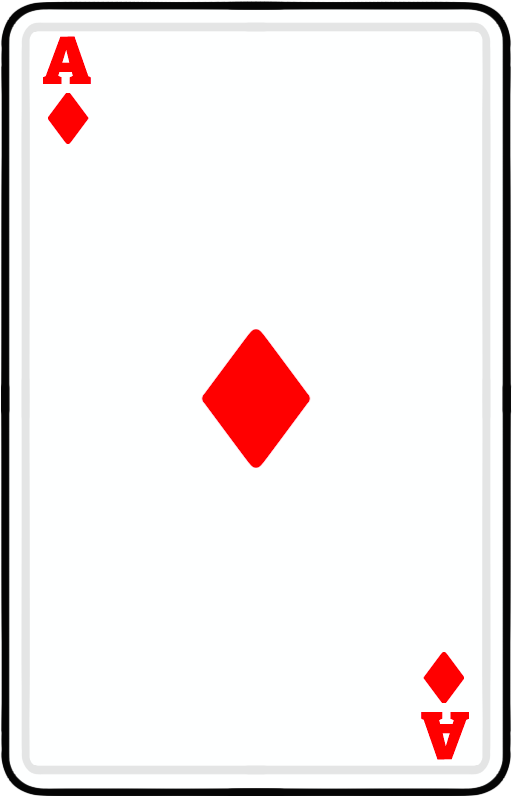
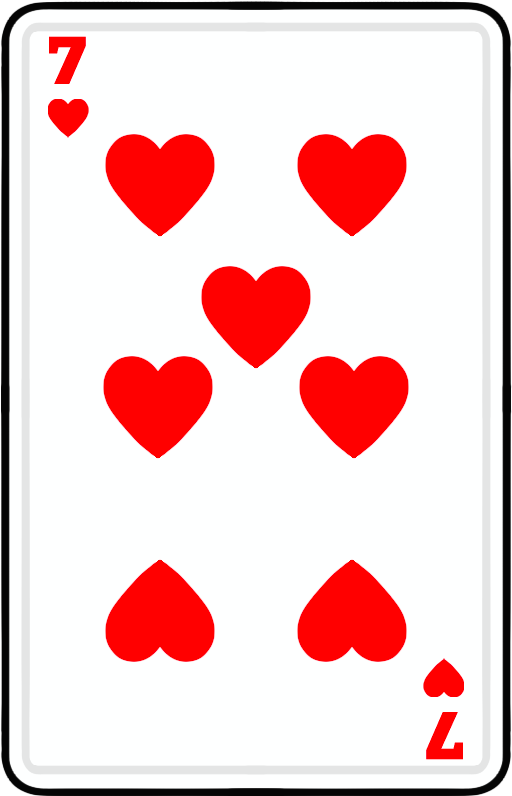
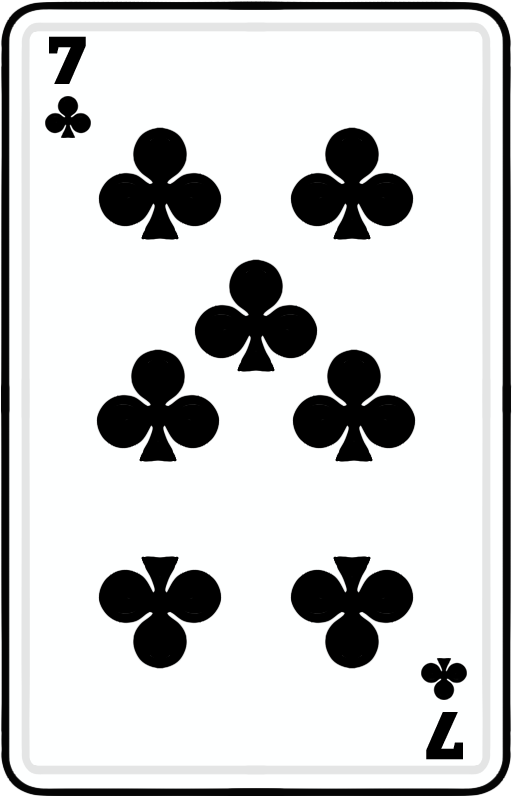
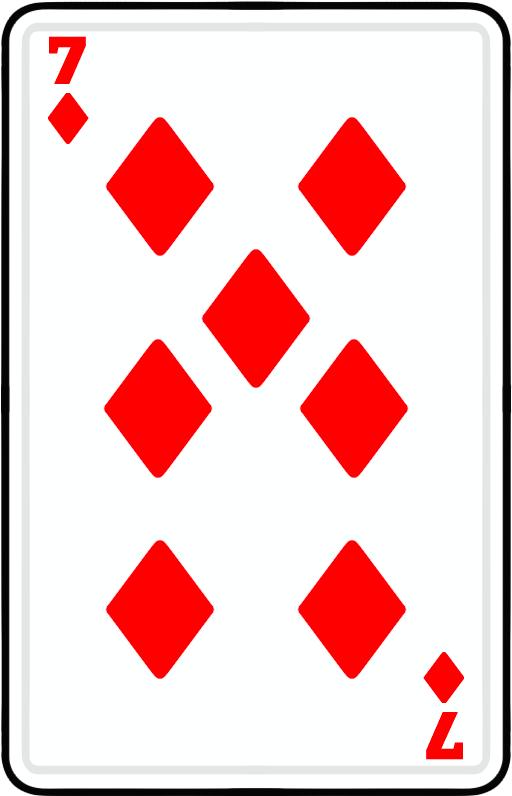
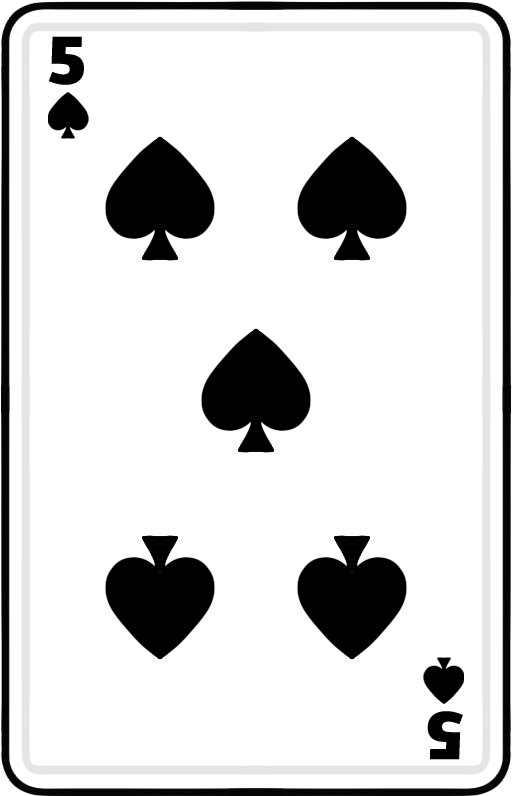
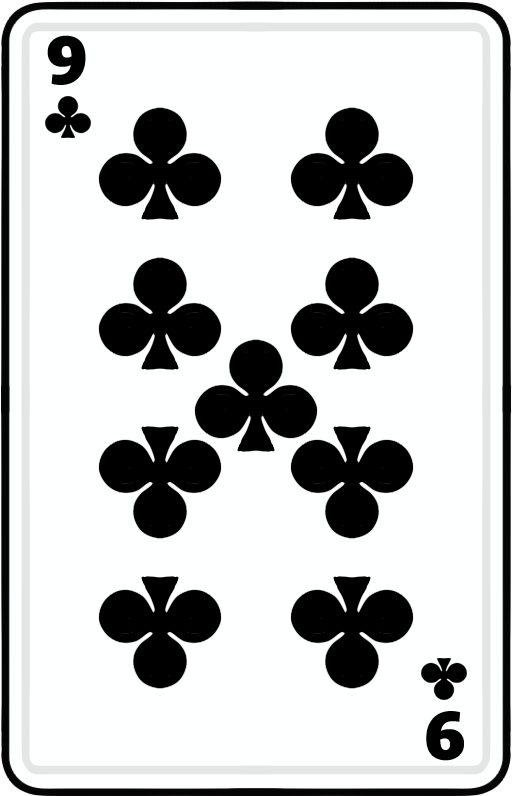
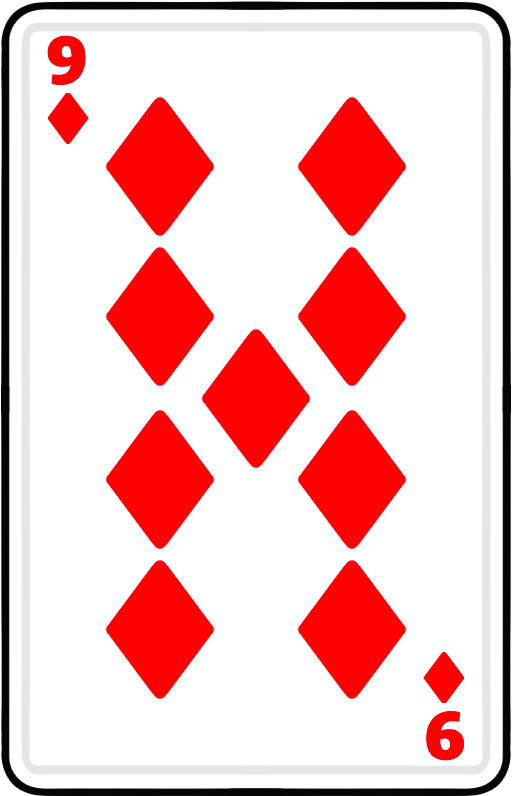
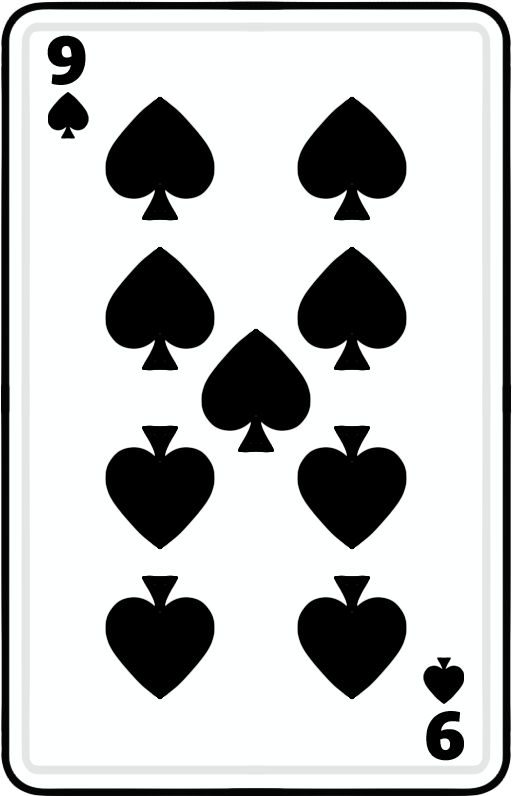
Some rule books describe the same deal from the other end: lay out 28 cards exactly as in Klondike, then spread the remaining 24 face up, four to each of columns 2 through 7. The arithmetic is identical and the tableau comes out the same. Both descriptions are correct. Four empty foundation piles sit above the tableau, one per suit.
How to Play Yukon Solitaire
Move all 52 cards to the four foundations, each built up in one suit from Ace to King. That is the whole goal.
- Deal seven columns. Deal all 52 cards into seven columns holding 1, 6, 7, 8, 9, 10 and 11 cards from left to right. There is no stock pile and no waste pile.
- Turn the top five of each column face up. The seven columns hide 0, 1, 2, 3, 4, 5 and 6 cards respectively, with the top five of every column face up except the first, which is a single face-up card. That leaves 21 cards hidden and 31 visible.
- Build the tableau down in alternating color. A red 9 goes on a black 10, a black 4 on a red 5. Nothing goes on an Ace, because no rank sits below it.
- Move any face-up card with everything on top of it. Pick up any face-up card, however deeply buried, and it travels with every card above it. Those passenger cards need not be in sequence, in suit, or in any order. Only the card you lifted and the card it lands on are checked.
- Fill empty columns with Kings. Only a King, or a group whose bottom card is a King, can move into an empty column. A King buried under unrelated cards still qualifies and brings the whole pile with it.
- Send cards to the foundations one at a time. Foundations build up in suit from Ace to King, and take one card at a time from the exposed end of a column. The group move never applies to a foundation.
- Clear all 52 cards to win. Move every card to the four foundations. Face-down cards turn up automatically the moment nothing covers them, and turning one costs you nothing.
A column ending 9 of hearts, 4 of spades, King of diamonds, 7 of clubs looks hopeless to a Klondike player. It is not. Pick up the 9 of hearts, drop it on any black 10, and the other three ride along.
In our game a card played to a foundation stays there. Some versions let you pull it back down; ours does not, which makes the foundation timing advice below binding rather than optional. You score 5 points for each face-down card you turn and 10 for each card you send to a foundation.
Yukon vs Klondike
Yukon is Klondike with two rules changed. Everything else is shared, including the alternating-color tableau, the Ace-to-King suited foundations and the Kings-only empty column.
| Yukon | Klondike | |
|---|---|---|
| Cards on the table | 52 | 28 |
| Stock and waste | None | 24-card stock |
| Redeals | None | Yes |
| Column lengths | 1, 6, 7, 8, 9, 10, 11 | 1, 2, 3, 4, 5, 6, 7 |
| Face-down cards | 21 | 21 |
| Face-up cards at the deal | 31 | 7 |
| What moves as a group | Any face-up card plus everything on top | Only a correctly ordered run |
Both games hide exactly 21 cards. Yukon shows you all 31 of the rest, against Klondike showing 7, so you start with roughly four times as much open information. What you give up is the stock, and with it every chance to bring a new card into play. In Yukon no new information enters the game except by turning up one of those 21 face-down cards.
Why Yukon Solitaire Is Hard
Yukon punishes early mistakes that stay invisible for another twenty moves. There is no stock to rescue a blocked position, so a card sent to a foundation too soon cannot be replaced and cannot come back.
The arithmetic behind that: every tableau card has exactly two possible landing places in the entire game, the two opposite-color cards one rank above it. A 9 of diamonds can only ever be placed on the 10 of spades or the 10 of clubs. Nothing else, ever.
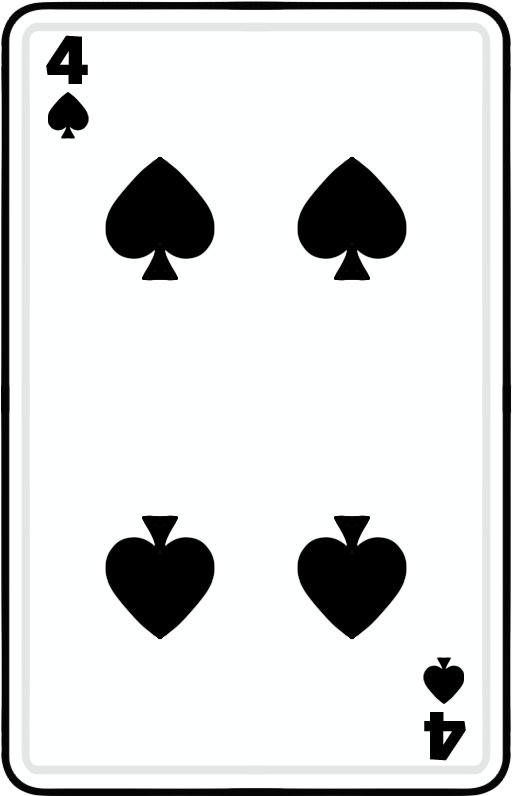
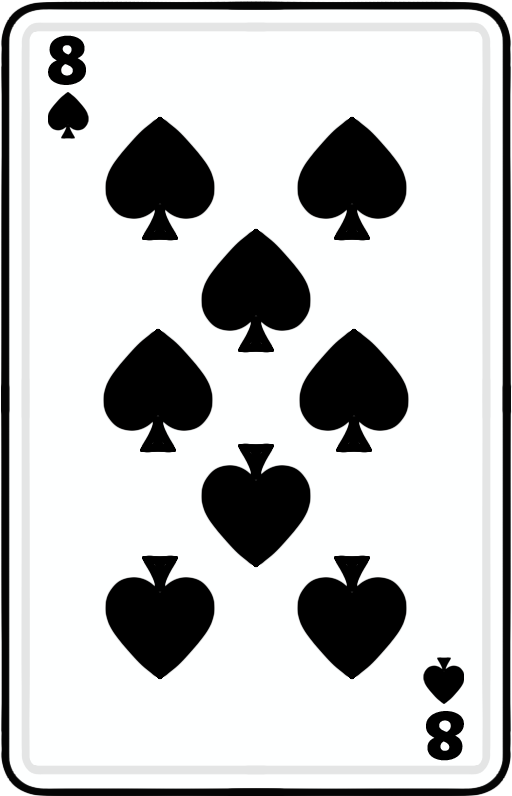
So banking a mid-rank card does not remove one card from play. It destroys half the landing capacity for a specific rank and color. Send the 8 of spades up while both red 7s still sit on face-down cards, and the surviving black 8 can rescue only one of them. The other red 7 will never move, the card beneath it will never turn, and the board is already lost. It will not look lost for a long time.
Yukon Solitaire Strategy
Turn a face-down card whenever you can. If a move exists that flips a hidden card, take it over any move that does not. Tidy sequences win Klondike games and lose Yukon ones, because the group-move rule means you never needed the sequence to be tidy, and building one usually buries the card you were trying to reach.
Send Aces up at once and hold everything from 4 to King. Nothing can be placed on an Ace, so an Ace in the tableau does no work. Twos and threes are nearly as safe. From the 4 upward, each card is a landing pad, and the two-destinations arithmetic above is the reason to keep it.
Never empty a column until you know which King is going into it. An empty column with no King available is not a resource, it is a wasted column, and the cards you cleared out of it are now clogging the columns you still need.
When a King does become available, pick the one with the most face-down cards beneath it. A King lifted out of column 7 can turn several hidden cards in one move. The same slot spent on a King in column 2 turns one.
Dig on the right, clear on the left, in that order. Columns 6 and 7 hold 5 and 6 face-down cards between them, more than half the hidden information in the game, so that is where moves buy you the most. Column 1 hides nothing at all, so emptying it flips no cards; its only value is the King slot it creates. Work the right side for information until you have spotted the deep King group that will claim column 1, then clear it.
Work backwards, not forwards. Instead of scanning for legal moves, pick a column and ask what would have to be true for its top card to leave. Then ask the same of that card. Trace the chain until you reach a card you can move right now, then play it back in reverse. If the chain dead-ends, because the card you need does not exist or is already covered, the column cannot be dug yet. Move on and come back after the board changes.
Your Odds of Winning
Most Yukon deals can be won, but not all of them, and the gap between what is possible and what players actually manage is the most interesting thing about the game.
We measured it rather than guessing. Our solver played 200 randomly dealt Yukon games through the same engine you play here, searching each one for a winning line. It found one in 145 of them and proved 3 unwinnable. The other 52 hit the search budget without a verdict, so at least 72.5 percent of deals are winnable and the real figure is higher: of the 148 deals the search actually settled, 98 percent had a solution.
Now compare that with how often people win. Measured human play across large public solitaire sites lands in the low teens, around 13 to 14 percent over samples of several hundred thousand games. Almost three quarters of Yukon deals can be won, and players win about one in seven. The difficulty is in the finding, not in the dealing.
Treat any confident percentage you see elsewhere with suspicion, including the widely repeated claim that a good player wins 80 percent of the time. That figure traces back to a single promotional article from 2005 and has no data behind it. The academic study that settled winnability for 73 patience variants to within a tenth of a percent does not cover Yukon at all.
Yukon Solitaire Variants
Russian Solitaire changes exactly one rule: the tableau builds down in the same suit instead of alternating color. That cuts every card's landing places from two to one and makes the game far harder. Measured win rates sit near 3 percent.
Alaska also builds in suit, but lets you go up or down in rank. Easier than Russian Solitaire, harder than Yukon. Moosehide keeps the Yukon deal and takes away the Yukon move, allowing only properly ordered runs to travel. It is the inverse case that proves the family is defined by its movement rule rather than its layout.
Double, Triple and Quadruple Yukon scale to two, three and four decks with more columns and more foundations. Every added deck makes the game harder, and the two-deck version wins around 10 percent of the time.
All Yukon Solitaire variants covers each one in detail. Scorpion shares Yukon's group-move rule but deals 49 cards, keeps three in reserve, and builds toward King-to-Ace suit sequences in the tableau rather than to foundations. If you like the way Yukon moves, try Spider, FreeCell and Forty Thieves.
Where Yukon Solitaire Came From
Yukon's earliest known appearance in print is page 58 of Albert Morehead and Geoffrey Mott-Smith's The Complete Book of Solitaire and Patience Games, published in 1949. The entry gives the game essentially as it is played today, including the rule that any card may be moved with everything covering it. The authors put the odds at one win in four.
That entry credits no earlier source and offers no origin story, and no earlier published description has been found. Whether Morehead and Mott-Smith recorded the game or invented it is genuinely unknown; the same book introduced around twenty games of their own. The popular story that the name comes from Klondike gold-rush prospectors is repeated widely, but no published source documents any connection between the game and the territory. The family does share a habit of northern place names, with Klondike, Alaska and Moosehide alongside it.
Yukon reached computers through the shareware channel rather than through Microsoft. It was one of the five games in the first release of Pretty Good Solitaire on 19 July 1995. It never appeared in any of Microsoft's four Entertainment Packs, nor in Solitaire Royale.
Frequently Asked Questions
Why is Yukon solitaire so hard?
There is no stock pile, so a blocked position stays blocked. Every card is dealt at the start, and a mid-rank card sent to a foundation too early removes one of only two landing places for the cards that needed it. Mistakes are permanent and usually stay invisible for another twenty moves.
How does Yukon solitaire differ from Klondike?
Two rules. Yukon deals all 52 cards with no stock pile and no redeals, and lets you move any face-up card along with every card on top of it, in any order. Klondike moves only correctly ordered runs. The tableau, foundation and empty-column rules are the same in both games.
Is Yukon solitaire always winnable?
No. We ran 200 random deals through a solver and it proved 3 of them unwinnable outright, so some deals cannot be won by any sequence of moves. With no stock to draw from, a deal that blocks stays blocked for good.
How is Yukon solitaire played?
Deal 52 cards into seven columns of 1, 6, 7, 8, 9, 10 and 11 cards, with the top five of each column face up. Build down in alternating color, moving any face-up card together with everything above it. Fill empty columns with Kings. Move all 52 cards to four foundations built up in suit from Ace to King.
What's the best strategy for Yukon solitaire?
Prioritize any move that turns a face-down card. Send Aces to the foundations at once but hold cards from 4 upward in the tableau, since each is one of only two landing places for the rank below it. Do not empty a column until you have identified the King that will fill it.
What are the odds of winning the Yukon Solitaire?
Our solver found a winning line in 145 of 200 random deals, so at least 72.5 percent are winnable. Human players do far worse: measured win rates on large public solitaire sites sit near 13 to 14 percent. The deals are winnable; finding the line is the hard part.
Is every game of Yukon solitaire winnable?
No. Across 200 solver-tested deals, 145 were proven winnable and 3 were proven dead, with the rest unresolved inside the search budget. Yukon has no stock and no redeal, so nothing new ever enters play to rescue a board that has blocked.
What's the fastest time to beat Yukon solitaire?
There is no recognized record. A confident player who reads the board well can finish a winnable deal in a few minutes. Our timer and move counter let you compare runs on the same deal through the daily challenge.
Play Yukon Solitaire Online
Play Yukon free with provably fair shuffles and no download. Every one of the 52 cards is on the table from the first move, which makes each deal a puzzle you can read all the way through before you commit to a line.
Play the daily Yukon challenge to replay the same deal as everyone else, or explore every solitaire game we host.