

Loading...
Loading...
A game joins the Yukon family through its movement rule, not its deal. In every Yukon-type game you may lift any face-up tableau card together with every card covering it, whatever order those cards happen to sit in, and only the lifted card and its destination are ever tested. Deck count, column layout and build rule all vary across the family. Moosehide settles the point from the other side: it uses Yukon's exact deal with Klondike's movement, which leaves it barely inside the family at all.
Russian Solitaire builds the tableau down in one suit rather than in alternating color, and that is the only rule it changes. The deal, the group move, the Kings-only empty columns and the Ace-to-King suited foundations all match the base Yukon rules.
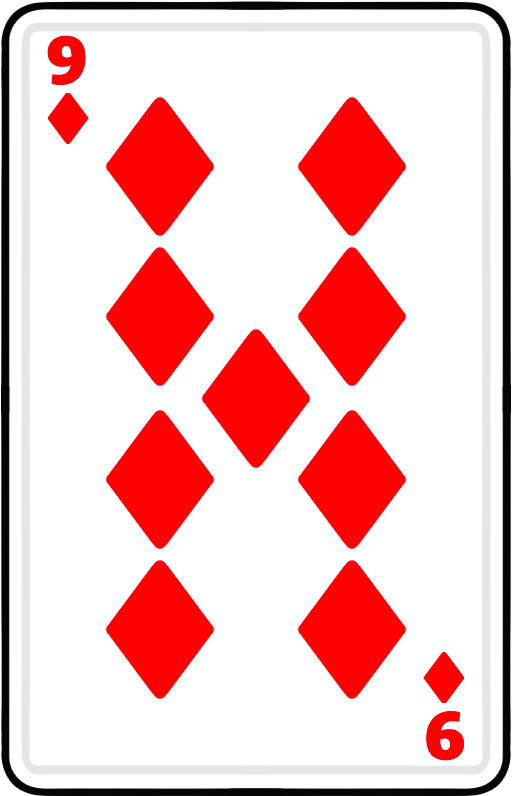
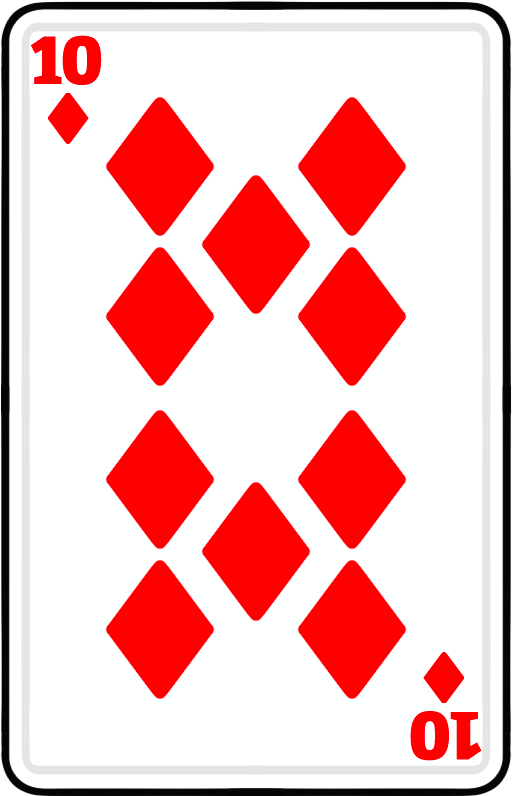
That single swap cuts every card's landing places from two to one. A 9 of diamonds fits the 10 of spades or the 10 of clubs in Yukon; in Russian Solitaire it fits the 10 of diamonds and nothing else, so once that card is banked or buried the 9 is homeless for the deal. Measured player results on large public solitaire sites put Russian Solitaire near 3 percent across roughly 40,000 recorded games, against about 14 percent for base Yukon.
Foundation timing flips here. Yukon players hold mid-rank cards back because each is one of only two landing pads for the rank below. Suit-locked building does not spend alternating-color capacity that way, so early banking costs far less than standard Yukon advice suggests.
Three unrelated games answer to the name Russian Solitaire: the Yukon variant above, Nijni Novgorod from the 1903 American Hoyle, and Russian Patience, a two-pack game described in 1876. Neither of the last two is a Yukon-family game. One mobile publisher also sells Yukon and Russian Solitaire bundled under a single title, which is why the two names travel together.
Alaska builds by suit in either direction: a 9 of diamonds may go on the 8 of diamonds or on the 10 of diamonds. Ranks do not wrap, so no Ace lands on a King and no King lands on an Ace. The deal, the group move, the Kings-only empty columns and the suited foundations are all standard Yukon.
The cleanest way to place it is against Russian Solitaire rather than against Yukon. Alaska is Russian Solitaire with the added freedom of building upward, which makes it easier than Russian and still harder than Yukon, because the suit lock costs more than the second direction gives back. Measured player results sit near 5 percent across more than 150,000 recorded games.
Watch the label on this one. Some programs do not use the name Alaska at all. They ship these rules as the easier of two Russian Solitaire settings and reserve the harder setting for descending-only same-suit play, so the same menu entry can mean either game depending on which option is selected.
Moosehide allows only a properly ordered run to travel as a group, which strips out the move Yukon is built around. A run must already sit in descending, alternating-color order before it can go anywhere, exactly as in Klondike. Picking up a buried card and dragging an unrelated heap along with it is not legal.
Everything else matches Yukon. Columns of 1, 6, 7, 8, 9, 10 and 11 cards, five face-up on each column after the first, no stock, tableau down in alternating color, Kings into empty columns, foundations up in suit from the Ace.
The combination is what makes Moosehide worth knowing. It runs Yukon's layout with Klondike's movement and no stock to rescue a stalled board, so the freest move in the family is gone and nothing replaces it. Only one rules source documents Moosehide, so treat the detail as provisional, and no measured win rate for it has been published.
Free-cell versions of Yukon add single-card parking spots and change nothing else. A cell holds one card, and that card stays available to the tableau and to the foundations at any time.
One card of storage does more work here than the same cell does in most games. Standard Yukon forces every covering card to travel with the card beneath it, so a single unwanted card sitting on the junction you need can stall a whole chain. A cell lifts that card out without requiring a legal tableau destination for it.
No standard cell count exists. One version deals two cells, both empty at the start. Another ramps difficulty by level, opening with four cells and taking one away at each level after. The names are not interchangeable either: Yukon Cells and Yukon Freecell are separate games with separate cell counts, so check what a given app hands you before planning around it.
Adding decks changes the size of the board and nothing about how cards move. Two decks means 104 cards and eight foundations, two per suit. Three decks means 156 cards and twelve foundations, four decks 208 cards and sixteen. Tableau building stays down in alternating color throughout, and the group move is untouched.
Every deck you add costs win rate. Measured player results run 10.28 percent for Double Yukon, 3.89 percent for Triple Yukon and 2.36 percent for Quadruple Yukon, against about 14 percent for the single-deck game. Double Russian, which is Double Yukon with same-suit building, measures under 4 percent.
Column layouts are not settled, so read the tableau before planning a line. Some two-deck versions deal ten columns starting at five cards; others deal nine columns with a face-down run of one through nine. A separate two-deck game called Yukon Two Decks uses nine columns and reports better odds than Double Yukon, which makes those two names worth telling apart rather than treating as one game.
| Variant | What changes | Difficulty | Win rate |
|---|---|---|---|
| Yukon | Base game | Base | About 13.7% |
| Russian Solitaire | Builds down in suit, not alternating color | Much harder | About 3% |
| Alaska | Builds in suit, up or down | Harder | About 5% |
| Moosehide | Group move removed, ordered runs only | Harder | None published |
| Yukon Cells | Adds free cells, count varies by app | Easier | None published |
| Double Yukon | 2 decks, 8 foundations, 9 or 10 columns | Harder | About 10.3% |
| Triple Yukon | 3 decks, 12 foundations | Much harder | About 3.9% |
| Quadruple Yukon | 4 decks, 16 foundations | Much harder | About 2.4% |
| Double Russian | 2 decks, builds down in suit | Much harder | Under 4% |
Every figure above is a measured player result, games won divided by games played across large public solitaire sites. Solver figures run far higher because a solver sees all 52 cards and never misplays. Our own search proved a winning line in 145 of 200 random Yukon deals, a floor of 72.5 percent, against a measured player rate near 14 percent. Published solver work puts Russian Solitaire near 7 percent solvable. The gap between what is winnable and what players convert is the real story in both games.
Scorpion borrows the Yukon move and pairs it with Spider's objective, which is why catalogues file it with Spider. Four rules separate it. It deals 49 cards into seven columns of seven and holds three back, dealing them onto the first three columns when you stall. Its first four columns hide three cards under four face-up ones while the last three columns are entirely face-up. The tableau builds down by suit rather than alternating color. And the King-to-Ace suit runs are assembled inside the tableau itself instead of on foundations. Kings and King-headed groups fill gaps, as in Yukon. Measured play sits near 6 percent.
Australian Patience is closely related to Yukon rather than a variant of it, and the stock is the reason. It deals 28 cards into seven columns of four, all face-up, and keeps the other 24 as a stock turned one card at a time to a waste with no redeal. Building runs down by suit. Movement is pure Yukon, Kings with whatever covers them fill empty columns, and foundations build up in suit from the Ace. No game in the Yukon core has a stock of any kind, which is what puts this one just outside it.
A closing warning on names: Brisbane attaches to two different games, a Yukon-type variant that builds down by rank regardless of suit and color, and a rework of Australian Patience's opening tableau. The name alone will not tell you which one an app has given you.
Play Yukon Solitaire to work a group move with real cards. The full Yukon rules cover the base game every variant here changes, the Yukon FAQ answers what they leave open, and every solitaire game we host sits one page away.
Start with the base game before you take on the suit-locked variants. Yukon is the one that teaches the group move.
Play Yukon Solitaire Now