

Euchre Variants
Standard euchre is four players in two partnerships with a 24-card pack, and it is the only version our game deals; the standard euchre rules have their own page. The variants below are how other tables play with two, three, five, or six people, a joker, or an auction, and every deal is summed.
Two-Handed Euchre
Yes, you can play euchre with two people. There are four published ways to play 2 handed euchre, and the two worth learning are the oldest, a five-card game on the standard rules, and the one most often described today, a 12-card layout that uses the whole pack.
The Five-Card Game
Play it as ordinary euchre with two hands. Each player gets five cards in packets of 2 and 3, and the next card is turned up: 10 dealt + 1 up-card + 13 face down = 24. Older books use a 32-card pack, Ace down to 7: 10 + 1 + 21 = 32.
Trump is made in the usual two rounds, the non-dealer speaking first; the dealer picks it up and discards, or turns it down. If both players pass twice the hand is thrown in, though some players stick the dealer. The non-dealer always leads the first trick.
Scores match the four-hand game: 1 for 3 or 4 tricks, 2 for a march, and 2 to the opponent for a euchre. With no partner to sit out there is no going alone, so five tricks earn 2, never 4. Game is 5 points in older books and 10 in modern rules.
The 12-Card Layout
This version deals the whole pack, with no kitty and no up-card. Each player gets 4 cards face down, 4 face up on top of them, and 4 in hand: 2 x 12 = 24. You play 12 tricks, each from your hand or your face-up table cards, and when a table card goes, the card beneath it is turned face up (some rules wait until the trick ends). The non-dealer leads first.
Trump and scoring vary by rule book:
| Rule set | Making trump | Scoring | Game |
|---|---|---|---|
| Call, points per trick | The non-dealer names trump or passes; after a pass the dealer must name it. The caller needs 7 of the 12 tricks | Each player scores 1 per trick taken; a euchred caller gives the opponent all 12 | 31 |
| Call, caller scores | As above | Only the caller scores: 7 tricks = 1, 8 = 2, 9 = 3, 10 or more = 4; a euchred caller gives the opponent 2 | 10 |
| Auction | Players bid tricks, minimum 7; the high bidder names trump | Only the maker scores: 7 = 1, 8 = 2, 9 = 3, and so on up to 12; a failed bid scores nothing | 10 |
The other two methods give each player a second five-card hand to swap into, or three face-down extras to merge with a normal hand once trump is named (2 x 8 = 16 dealt, 8 left over, 24 in all).
Three-Handed Euchre and Cutthroat
Can you play Euchre with just three people?
Yes. Three-handed euchre, also called cutthroat, deals five cards to each player from the 24-card pack and turns up the next card: 15 + 1 + 8 = 24. Trump is made in the same two rounds as the four-hand game, and whoever makes it plays alone against the other two. Most modern rules play to 10.
What is cutthroat Euchre?
Cutthroat euchre is euchre for three with no fixed partners. The player who makes trump plays alone and needs 3 tricks, while the other two defend together for that hand only. The name is loose, though: Buck Euchre and a seven-card bidding game from Indiana have both been called cutthroat as well.
Older books, and some modern rules, deal 3 handed euchre from 32 cards: 15 + 1 up-card + 16 = 32. Some tables stick the dealer; others throw the hand in.
Scores differ by book. The maker takes 1 for 3 or 4 tricks and 3 for a march (2 in two older books). A euchre gives each defender 2 in most accounts and 1 each in others, and one older English book makes the euchred maker lose 2 instead, even below zero. Game is 10 in most modern rules, 5 in older books, and 11 at some tables.
Alliances last one hand, so the two trailing players gang up on whoever leads: the three-player form of playing to the score.
The Dummy-Hand Version
An empty fourth seat gets a dummy hand. Five cards go to each player and to the dummy, and 4 to the kitty with the top one turned: 4 x 5 = 20 + 4 = 24. The maker may pick up the dummy and keep the best 5 of those 10 cards, unless going alone. The maker scores 1 for 3 or 4 tricks and 3 for a march, a euchre gives each defender 2, and game is 10.
Five-Handed Euchre
Is there a 5 handed Euchre?
Yes, several, and most share one device: the maker finds a partner by calling a card. In Call-Ace Euchre, trump is made the usual way, then the maker names the best card of a side suit, and whoever holds it becomes a secret partner. Five players use 28 cards: 25 dealt and 3 left.
The partner stays secret until the called card falls, and if the maker holds it or it was never dealt, the maker has no partner that hand. Each player scores separately: in the old American rules, maker and partner take 1 each for 3 or 4 tricks and 3 each for a march, and a euchre pays 2 to every other player.
Other five-player games include an auction with a 3-card widow (25 + 3 = 28) and five-player Pepper in Michigan on a doubled 48-card pack (5 x 9 = 45 + 3 = 48).
Six-Handed Euchre
Six-handed euchre is two teams of three, seated alternately. Two regional forms add cards and raise the scores.
Cornwall. The pack is 33 cards: the 24-card pack plus the 8s and 7s (ranking lowest) and a joker, so 6 x 5 = 30 + 3 = 33. Some tables use two 25-card packs instead (30 dealt + 20 = 50), and then the second of two identical cards played wins. A march or a euchre scores 3, and a lone march 6. A loner's two partners both sit out, and the loner may ask either for a chosen card, discarding one in return.
Almonte, Ontario. The pack runs 8 through Ace (28 cards) plus three jokers, shown by the 2, 3, and 4 of spades with the 4 highest. Thirty cards are dealt and the last is turned for trump, so nothing is hidden: 30 + 1 = 31. A turned joker makes the dealer name trump before looking. Scoring is Cornish, game is 15, and leagues play 12 hands at each table.
A plainer version uses 32 cards, 7 through Ace (30 dealt + 2, the top one turned), with the usual rounds and scores, to 10 or 11.
British Euchre and the Benny
What is the Benny rule in Euchre?
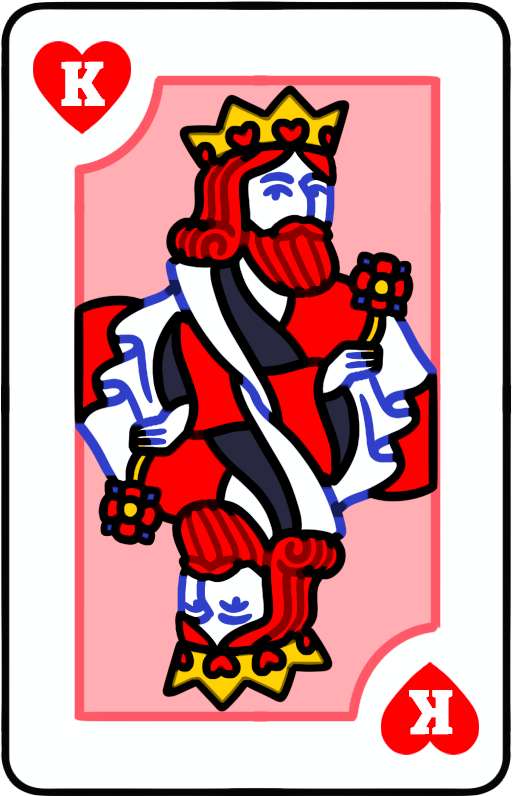
The Benny rule adds a joker, called the Benny or Best Bower, as the highest trump whatever suit is trump, above the right bower. A 2 of spades can stand in for it. If the Benny is the card turned up, the dealer's side become the makers automatically, and the dealer names trump before looking at their hand.
British euchre uses 25 cards, the 24-card pack plus the Benny, so trump grows to eight cards and the Benny counts as a trump when following suit. Deal five each in packets of 2 and 3 and turn the next card: 20 + 1 up-card + 4 face down = 25.
The dealer's partner may accept the turned suit only by going alone. Once trump is made, any player may go alone, and a lone defender who euchres the makers scores 4 (not every league allows it). Other scores are the usual 1 for 3 or 4 tricks, 2 for a march, 4 for a lone march, and 2 for a euchre.
Game is usually 11. Leagues in Cornwall play to 15 or 21, and Guernsey's play to 15 with a 33-card pack, the joker plus 7 through Ace. It is played mainly in Cornwall, Devon, Kent, the Channel Islands, and coastal East Anglia. Accounts disagree on which way it crossed the Atlantic, and the joker itself entered the pack for euchre in the 1850s or 1860s (see the history of euchre).
Bid Euchre and Pepper
Bid Euchre is a family of North American games in which trump goes to the highest bidder instead of a turned-up card, and Pepper is one of them. In the early 1900s "Bid Euchre" was also a name for Five Hundred.
In the general game, usually four players in fixed partnerships, each player bids once from the dealer's left: a number of tricks plus a suit or no trump, each bid for more tricks than the last. The high bidder names trump and leads. If the bid is made, each side scores its tricks; if not, the bidders lose the amount of the bid and the opponents still score theirs. You can win only on a hand where your side makes a bid or sets one.
Packs vary by region: one euchre pack of 24 (4 x 6), or two packs stripped to 32 cards in Barrie, Ontario (Jack through Ace, 4 x 8), 40 in Indiana's Hoosier game (10 through Ace, 4 x 10), or 48 across the Midwest (9 through Ace, 4 x 12). Games run to 32, 50, or 52, and with two packs the first of two identical cards played wins.
Pepper is the bid game of the Great Lakes Midwest, especially Iowa, and also Wisconsin and Michigan: four players in partnerships, 6 cards each, 4 x 6 = 24, no kitty. One round of bids runs from 1 to 6 tricks, then little pepper, then big pepper, which means playing alone for all 6 tricks. The makers score the bid or lose it; the opponents score 1 per trick, or lose the bid if they play and take none, and they may surrender the hand. Little pepper is worth 7 either way and big pepper 14. Game is usually 42.
Buck Euchre and Dirty Clubs
Buck Euchre is euchre for three or four players with no partners and a score that counts down. The four-player version comes from Ohio, and the game also goes by Cut-throat Euchre and Dirty Clubs.
Deal five each in packets of 2 and 3 and turn the next card: 20 + 1 + 3 = 24. A turned club makes clubs trump at once, with no bidding, and nobody may drop out; that is dirty clubs. Otherwise trump is made as in euchre; if nobody makes it, the hand is played at no trump with everyone in. The maker must take 3 tricks. Each other player stays in, promising at least 1 trick, or drops out.
Everyone starts at 25, and each trick you win takes 1 off. A euchred maker adds 5 and gets no credit for tricks, a player who stays in and takes none also adds 5, and players who drop out stay put. First to 0 or below wins.
Dirty Clubs is also the name of a relative that starts at 20, has one round of bidding for tricks, and seats more than four by adding 8s, 7s, and lower cards, since 5 x 5 = 25 is more than 24. A three-player Buck deals four hands of five, one a face-down widow (20 + 4 undealt = 24), and starts at 15.
Railroad Euchre and Other Old Forms
Railroad Euchre is the four-hand partnership game set up to pile up points fast. A joker joins the pack as top trump, making 25 cards (20 dealt + 1 up-card + 4), and players agree beforehand which suit is trump if the joker is turned. An 1868 description uses 33 cards instead and plays to 10 rather than 5.
Its signature is partner's best card: a loner passes one card face down and gets the partner's best card back, sight unseen, and cannot refuse it. Either defender may go alone against a loner with the same swap, and a lone defender who euchres a lone maker scores 4.
Call-Ace Euchre, described under five-handed euchre, is another old form. So is Hasenpfeffer, an early name for Pepper: a partnership auction on 25 cards with the joker on top, 6 each plus a 1-card widow for the high bidder (4 x 6 + 1 = 25), played to 10.
Progressive Euchre
Progressive euchre is a party or tournament format, not a rule change. Tables of ordinary four-hand euchre are numbered from the head table, which has a bell, down to the booby table. When the head table finishes its game, the bell stops every table. Winners move up, losers stay, and pairs split so everyone gets a new partner; head-table losers drop to the booby table. Gold, red, and green stars decide the prizes. Modern singles tournaments change partners and opponents every game: 12 hands a game, three deals each, with each player's points added up over 8 games.
Canadian Loner and Other House Rules
Under the Canadian loner rule, a dealer's partner who orders up the up-card must play alone, and the dealer's hand goes face down. It applies in round one only, and it is played in Canada, Britain, Australia, and parts of New Zealand. In the USA the dealer's partner may order up and play with the dealer, and Ohio tournament rules say the partner is not forced alone. Our game does not use the Canadian loner, but it always sticks the dealer; that rule, defending alone, the farmer's hand, and the rest are explained under euchre house rules.
Euchre Variants Compared
| Variant | Players | Pack | Cards dealt + kitty = total | How trump is made | Scoring / target |
|---|---|---|---|---|---|
| Standard (our game) | 4, two teams | 24 | 4 x 5 = 20 + 4 = 24 | Up-card, two rounds; our game always sticks the dealer | 1; march 2; lone march 4; euchre 2 to defenders; 10 |
| Two-hand, five cards | 2 | 24 or 32 | 10 + 1 up + 13 = 24; 10 + 1 up + 21 = 32 | Up-card, two rounds | 1; march 2; euchre 2; 5 or 10 |
| Two-hand, 12-card layout | 2 | 24 | 2 x (4 down + 4 up + 4 in hand) = 24, no kitty | Non-dealer calls, dealer stuck; or auction, minimum 7 | 1 per trick to 31, or caller only to 10 |
| Three-hand cutthroat | 3 | 24 or 32 | 15 + 1 up + 8 = 24; 15 + 1 up + 16 = 32 | Up-card, two rounds; maker plays alone against two | 1; march 3 (2 in older books); euchre 2 to each defender (1 each at some tables); 10 (also 5 or 11) |
| Three-hand with dummy | 3 | 24 | 4 x 5 = 20 + 4 = 24 | Up-card; maker may take the dummy | 1; march 3; euchre 2 to each defender; 10 |
| Call-Ace (five players) | 5 (4 to 6) | 28 | 5 x 5 = 25 + 3 = 28 | Up-card; maker calls the best card of a side suit | Each player scores: 1 each; march 3 each; euchre 2 to every other player |
| Six-hand, Cornish | 6, two teams of 3 | 33 (or 50) | 6 x 5 = 30 + 3 = 33; 30 + 20 = 50 | Up-card | March or euchre 3; lone march 6 |
| Six-hand, Almonte | 6, two teams of 3 | 31 | 6 x 5 = 30 + 1 turned = 31 | Up-card; three jokers | As Cornish; 15 |
| British (Benny) | 4, two teams | 25 (Guernsey 33) | 4 x 5 = 20 + 1 up + 4 = 25 | Up-card; dealer's partner must go alone; turned Benny makes the dealer's side makers | 1; march 2; lone march 4; euchre 2; lone defender's euchre 4; 11 (leagues 15 or 21) |
| Bid Euchre | 4, two teams (usually) | 24, 32, 40, or 48 | 4 x 6 = 24; 4 x 8 = 32; 4 x 10 = 40; 4 x 12 = 48 | Auction, one bid each | Tricks taken; a failed bid loses its value; 32, 50, or 52 |
| Pepper | 4, two teams | 24 | 4 x 6 = 24, no kitty | Auction 1 to 6, then little pepper, big pepper | Plus or minus the bid; little pepper 7, big 14; 42 |
| Buck Euchre | 3 or 4, no teams | 24 | 4 x 5 = 20 + 1 up + 3 = 24 | Up-card; a turned club makes clubs trump | Count down from 25; 5 added for a euchre or a trickless stay-in |
| Dirty Clubs | 4 or more | 24, plus low cards for more players | 20 + 4 = 24 at four | Turned club makes clubs trump; else one round of bids | Count down from 20 |
| Railroad | 4, two teams | 25 (33 in 1868) | 4 x 5 = 20 + 1 up + 4 = 25 | Up-card; joker is top trump | Standard, plus lone defender's euchre of a loner 4; 5 (10 in 1868) |
| Hasenpfeffer | 4, two teams | 25 | 4 x 6 = 24 + 1 widow = 25 | Auction 1 to 6; high bidder takes the widow | 1 per trick; 10 |
Our game deals the standard four-hand game: you and a computer partner against two computer opponents, 24 cards, first to 10 points.
Play Euchre Now